2025 - A Year in Books
Feb 13, 2026
Contents
- Introduction
- Non-Fiction
- Dealing With Feeling: Use Your Emotions to Create the Life You Want - Marc Brackett
- Reading Lessons: An English Teacher’s Love Letter to the Books that Shape Us - Carol Atherton
- The Invention of Nature: Alexander von Humboldt's New World - Andrea Wulf
- The Wright Brothers - David McCullough
- Material World: The Six Raw Materials That Shape Modern Civilisation - Ed Conway
- The Antidote: Happiness for People Who Can't Stand Positive Thinking - Oliver Burkeman
- Fiction
- An Important Announcement (and a Reflection)
- Stats
Introduction
Hello and welcome to the sixth edition of my annual reading round-up.
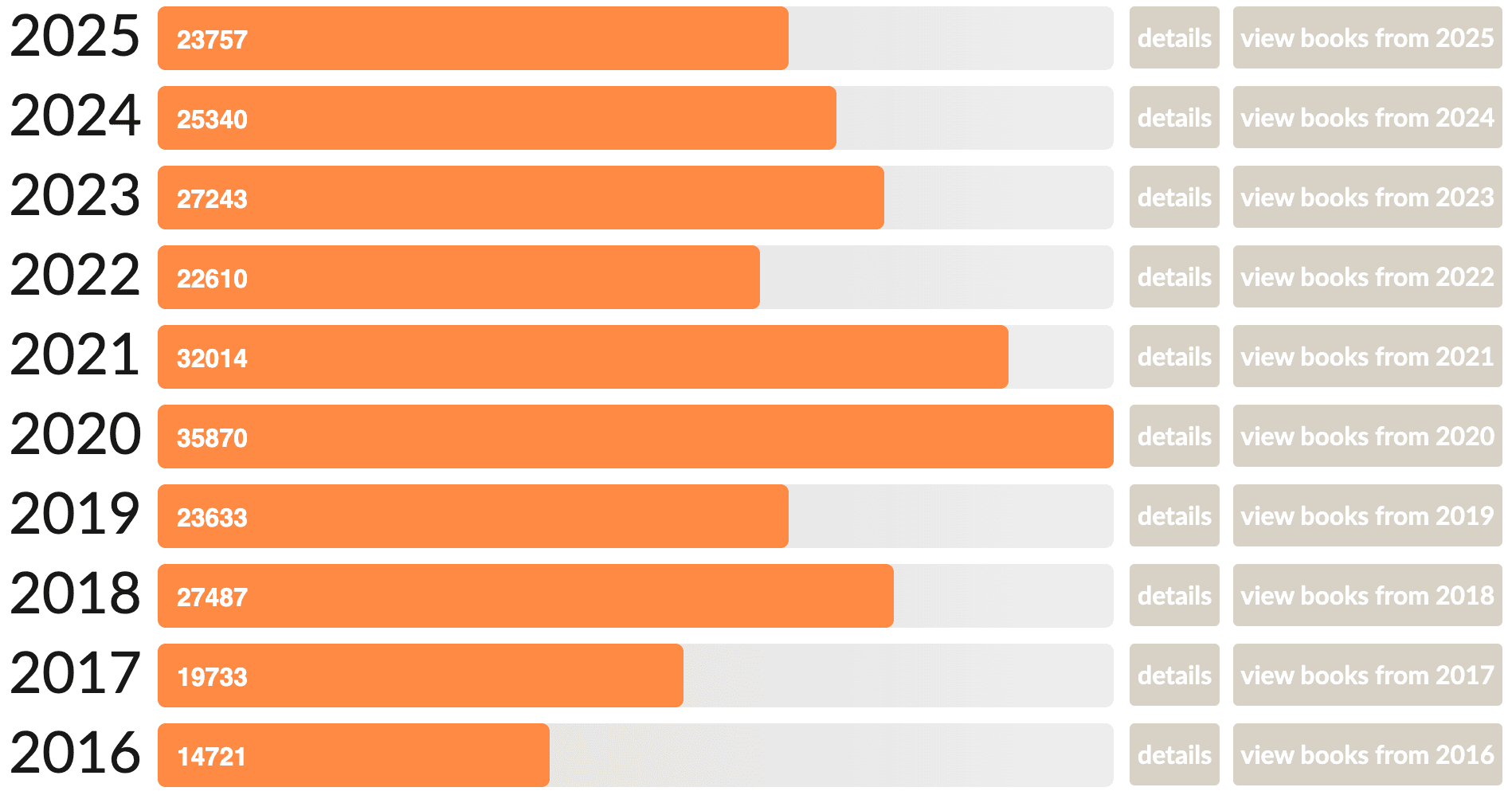
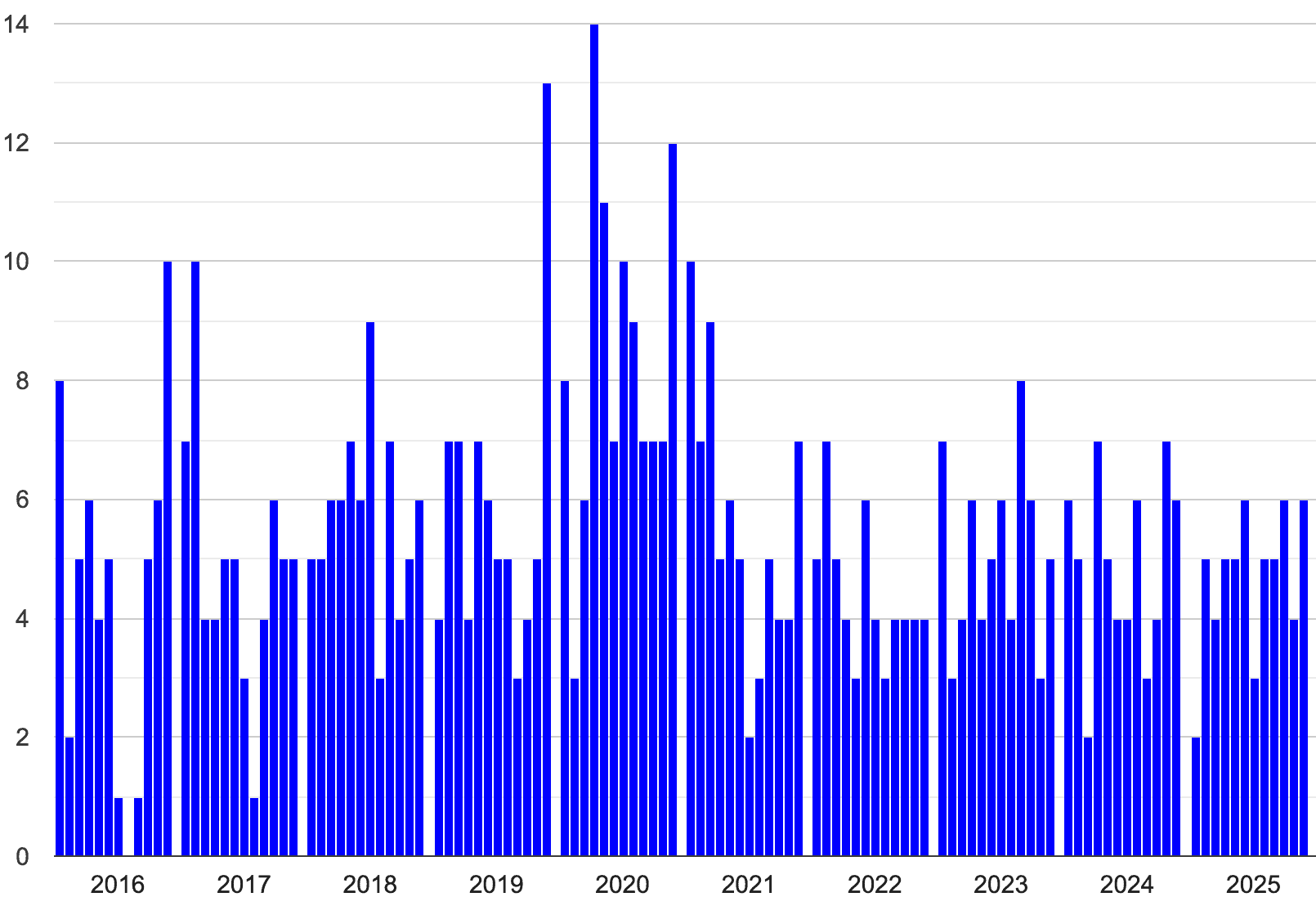
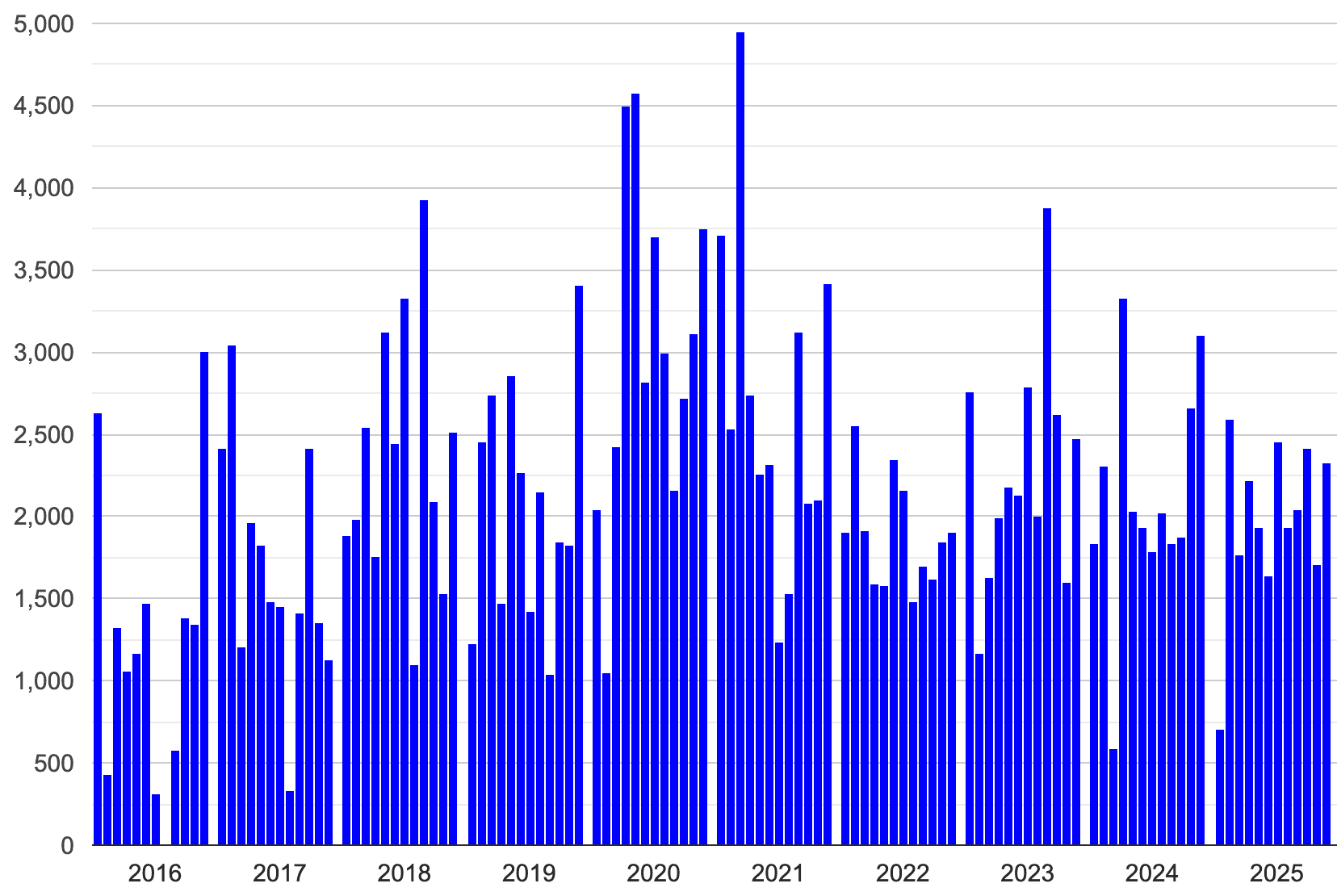
2025 was a year of big life events. I got engaged and bought a house, but more importantly, I read more than a book a week for the 10th consecutive year, which might be my biggest ever achievement - eclipsing even my PhD! In 2025, I read 56 books (23,160 pages), at an average of 413 pages per book.
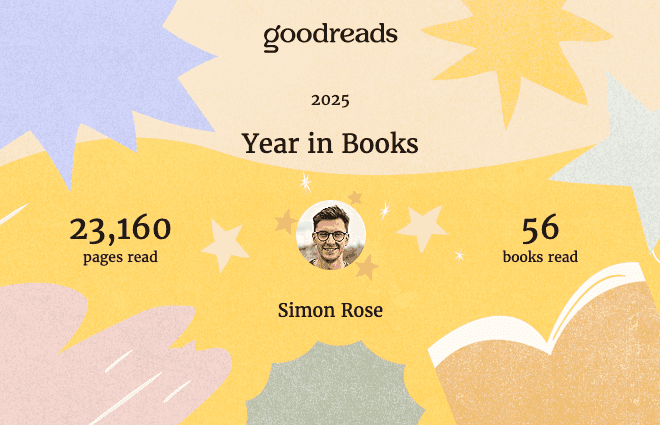
In this post, I've written about the top 10 books that I read in 2025: four fiction and six non-fiction. I read all of these on my Kindle, and for most non-fiction books I took notes on my Notes app. In 2025, I started using part of the Zettelkasten technique and recording both notes about the text and "fleeting notes" about my reflections on them. I still track my reading on Goodreads and I tend to find new books on there, through friends and family, in Waterstones, or more consistently this year, using AI tools as a recommendation engine. There's also an announcement and a reflection at the end of the post, so stick around.
Let's get into it.
Non-Fiction
Dealing With Feeling: Use Your Emotions to Create the Life You Want - Marc Brackett
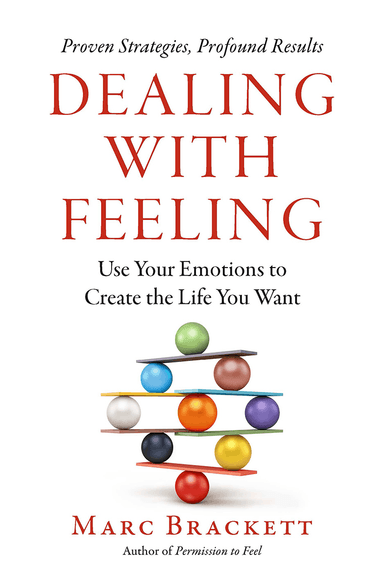
I wrote about Brackett's first book, Permission to Feel, in my 500+ Days of Mood Tracking blog post in 2022. It had a huge impact on me when I read it in 2020, despite not making my top 10 for that year (difficult when I read over 100 books to be fair), so I was excited when I found out that Brackett had written a second book.
Whereas Permission to Feel is about recognising, labelling and understanding different emotions, placing them on an axis of energy and pleasantness, Dealing with Feeling focuses on regulating those emotions and the broader interpersonal and societal impact of better emotional regulation. At its core, the book is about different strategies for emotional self-regulation: spatial distancing, temporal distancing, distanced self-talk, reappraisal and visualisation. Brackett discusses breathing and mindfulness, the impact of stress, nutrition, sleep and exercise on emotional regulation, growth mindsets ("I am experiencing anxiety" rather than "I am an anxious person") and how to develop these skills in children as their brains are growing. It channels a lot of concepts that I've read about over the years, but through an emotional regulation lens.
Brackett also talks about co-regulation: how those around us regulate us and vice versa. I hadn't really thought about this in any depth before, and Brackett keeps coming back to a utopian vision of the world where everyone is able to regulate and co-regulate. He closes the book with the idea of defining a 'best self' in different scenarios in your life, how others would describe you on your best days, and actively trying to live up to that.
Despite feeling quite Americanised ("create the life you want"), it was the book that had the most practical impact on my life this year. It was insightful and actionable, and explains a really important skill that doesn't get enough attention. I've been using the free How We Feel app (where Brackett is the scientific lead) daily for over five years now, and I'd recommend it to anyone looking to better recognise and deal with their emotions.
"Emotion regulation starts with giving ourselves and others the permission to own our feelings—all of them."
"When we can’t recognize, understand, or put into words what we feel, it’s impossible for us to do anything about it"
"Emotion skills must be acquired. Nobody is born with them all in place and ready to work."
"Imagine how it must be for children. The same constant flow of feelings, running the gamut from crushingly negative to euphorically positive—from the moment they wake up in the morning, through the entire school day, to the moment they fall asleep. Except that children haven’t learned yet how to manage their emotions—how to suppress and compartmentalize whatever’s inconvenient at the moment, how to channel useful feelings for maximum benefit. They experience everything so intensely—boredom, frustration, anxiety, worry, excitement, elation. And they sit for hours in a classroom, expected to pay attention to every word spoken by a teacher who’s probably under similar emotional pressures."
Reading Lessons: An English Teacher’s Love Letter to the Books that Shape Us - Carol Atherton
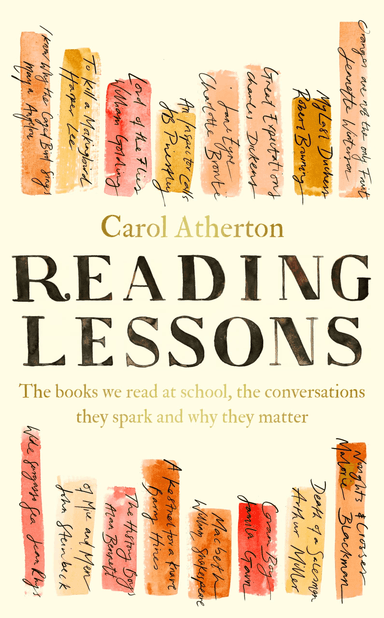
Reading Lessons is a reflection on teaching and learning. Atherton weaves her 25 years of experience as a secondary-school English teacher with reflections on her life to talk about the impact of reading on both herself and her pupils. Each chapter talks about a different set text, and as someone who did English Literature at both GCSE and A-Level, I had studied (or since read) most of them myself. For example: Lord of the Flies, Noughts and Crosses, An Inspector Calls, Death of a Salesman and To Kill a Mockingbird. Atherton then links each text to a theme, for example: social responsibility, loyalty, relationships and desire and seeing things differently.
Atherton talks about the importance of teaching literature in an education system and society increasingly dominated by STEM (science, technology, engineering and maths). She argues that literature holds the unique power to teach us about the complexities of life, to help us understand diverse perspectives and periods of history other than our own, and to build empathy for others. Unlike other, more popular, forms of media, reading has the unique capacity to take us inside the mind of someone else, to see what they see and to experience what they experience. The author becomes a temporary prism through which we see the world. Reading also requires perseverance and questioning in a world where nearly everyone has a slot machine in their pocket.
Atherton closes the book with a treatise on continuing to teach a diverse English curriculum (she makes the surprising point that many students will go through their entire GCSE English Literature course studying more writers named William than they will writers of colour). She argues that reading literature is important in developing well-rounded members of society, and is an essential ingredient in life and career success. As someone who works in tech, I see the value of these skills all the time: empathy, understanding and being able to ask thoughtful questions. Reading Lessons was one of those books where every chapter is interesting enough to read in isolation, but the whole book is a journey.
"Sometimes students think there are no right and wrong answers in English, that you can make a poem mean whatever you want it to mean, but this isn’t the case. Reading closely, reading carefully, is a matter of tact: working with the words on the page, what we know of their authors and their historical contexts, and the echoes they have in our own day and age. It takes time to develop the kind of understanding you need to be good at English: there are no quick fixes, no easy wins."
"English is the subject that helps us to shape our relationship with words and the many ways in which humans have used them. It teaches us to experiment and question, to read between the lines. We need these skills more than ever."
"The fact that a subject doesn’t immediately appeal to teenagers should never be a reason to avoid teaching it."
The Invention of Nature: Alexander von Humboldt's New World - Andrea Wulf
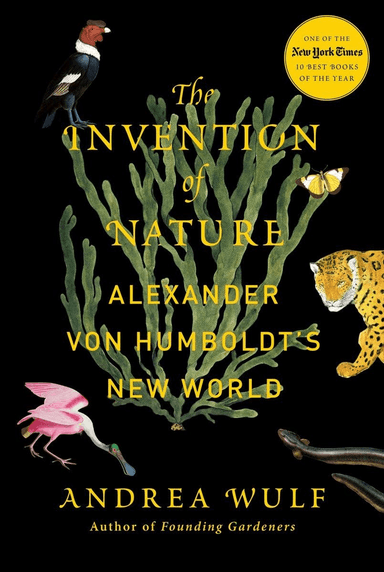
The Invention of Nature is about one of the most important people in modern history that you might've never heard of (I certainly hadn't): Alexander von Humboldt, a Prussian aristocrat who lived from 1769–1859. Before Humboldt, parts of the natural world (e.g. climate, plants, animals) were studied in isolation. He argued instead that nature functions as a single interconnected system. His ideas are unbelievably far-reaching, and underpin Charles Darwin's theory of evolution, Henry David Thoreau's transcendentalism, George Perkins Marsh's environmentalism, Haeckel's theory of ecology, and John Muir's founding of the first National Parks in the USA.
Humboldt strongly rejected Descartes' notion of humans being separate from nature (which underpins modern-day capitalism and economic theory). He was staunchly anti-slavery and anti-colonial at the height of European colonial power. He was one of the first to write about human-induced climate change. He was mates with Simon Bolívar and his writings about the natural beauty of South America inspired Bolívar to liberate it from Spanish colonial rule. He believed that knowledge should be available to all in a time when large parts of Europe were still illiterate, and that humans have an intrinsic emotional connection with our environment.
The book opens by describing Humboldt climbing the Chimborazo volcano in Ecuador in 1802, which he did to study as much as he could about it: flora, fauna, geology, atmospheric pressure, magnetism and the effect of altitude. With no specialist equipment, he and two companions got almost to the summit of 6263m, an insane achievement. He lived through a time of chaos in Europe with the French Revolution and the Napoleonic wars, which seriously curtailed his travel options. He has an unbelievable number of places named after him, mostly in the Americas, including rivers, currents, mountains, counties, cities and even a penguin. Finally, he was probably gay (although that's unconfirmed, because it was illegal at the time). What a guy.
"This was a web of life in a relentless and bloody battle, an idea that was very different from the prevailing view of nature as a well-oiled machine in which every animal and plant had a divinely allotted place."
"The effects of the human species’ intervention were already ‘incalculable’, Humboldt insisted, and could become catastrophic if they continued to disturb the world so ‘brutally’. Humboldt would see again and again how humankind unsettled the balance of nature."
"Nature is a living whole,' he later said, not a 'dead aggregate'. One single life had been poured over stones, plants, animals and humankind."
"Knowledge, Humboldt believed, had to be shared, exchanged and made available to everybody."
"All men were equal, Humboldt said, and no race was above another, because ‘all are alike designed for freedom’."
The Wright Brothers - David McCullough
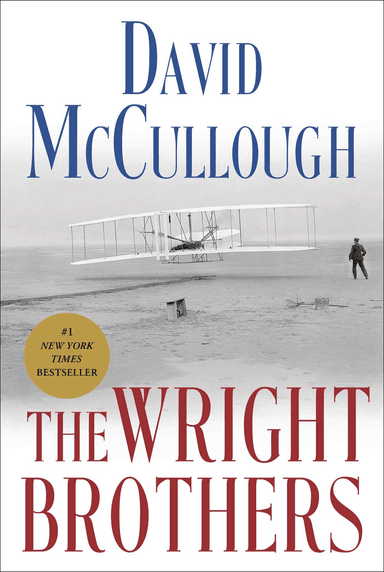
The Wright Brothers tells the story of Orville and Wilbur Wright and their journey to heavier-than-air flight. It's an incredible story of persistence and innovation from two bicycle mechanics from Ohio, competing against the might of old money and the Smithsonian Institution. McCullough draws on papers, private diaries, notebooks, scrapbooks and family correspondence to paint a distinctive portrait of the brothers: their very Protestant work ethic, mechanical ingenuity, powers of observation, precision and the belief in themselves and their cheap, self-made flying machines.
What particularly struck me about the book was the public opinion of flying at the time. It's easy to forget just how incredible flight is because we see and travel on planes all the time. But in the late 1800s, heavier-than-air flight was thought to be impossible. Inventors were mocked in the media, and when the Wright brothers first flew in 1903, most major newspapers dismissed it outright. It took years of repeated demonstrations to change public perception. It must've been unbelievable, and there's a fantastic passage about a million people watching the Wrights' flight demonstrations over New York City in 1909.
The book closes with a poignant discussion of the impact flight has had since then: the damage and destruction that it caused in two world wars, that 66 years from that windy day in North Carolina, humans would fly to the moon, and then the rise of commercial air travel and the subsequent "shrinking" of the Earth. Imagine if you'd told someone in 1875 that within 150 years their descendants could get in a little metal box in London and get out 17 hours later in Australia, there is no way they'd have believed you.
"In no way did any of this discourage or deter Wilbur and Orville Wright, any more than the fact that they had had no college education, no formal technical training, no experience working with anyone other than themselves, no friends in high places, no financial backers, no government subsidies, and little money of their own. Or the entirely real possibility that at some point, like Otto Lilienthal, they could be killed."
"What had transpired that day in 1903, in the stiff winds and cold of the Outer Banks in less than two hours time, was one of the turning points in history, the beginning of change for the world far greater than any of those present could possibly have imagined. With their homemade machine, Wilbur and Orville Wright had shown without a doubt that man could fly and if the world did not yet know it, they did."
"Inside the shed he proceeded to work on preparations, checking everything with total concentration. As would be said by one observer from the press, “Neither the impatience of waiting crowds, nor the sneers of rivals, nor the pressure of financial conditions not always easy, could induce him to hurry over any difficulty before he had done everything in his power to understand and overcome it.”"
Material World: The Six Raw Materials That Shape Modern Civilisation - Ed Conway
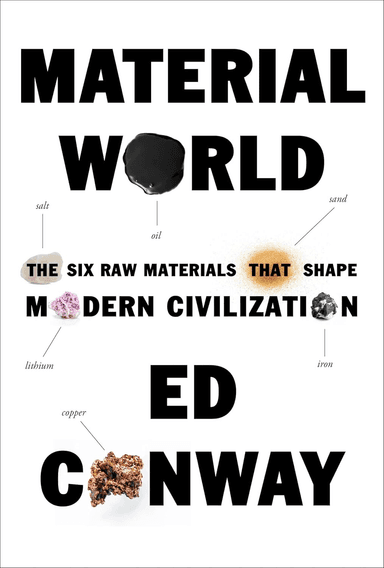
Material World is about the six materials that underpin our 'ethereal' world: sand, salt, iron, copper, oil and lithium. I couldn't put it down.
Conway begins the book by discussing our separation from the 'material world', stating that much of our modern lives are abstract with material complexity hidden: our smartphones, the internet, software, finance, money, even our cars and the food we eat. He argues that modern life has escaped physical constraints, but they are still there: the mines, refineries, ports and global supply chains, even if they are out of sight and out of mind. Extraction and processing is essential, and subsequently environmental damage and exploitation are inescapable.
Every page of Material World was interesting. With some books, it can feel quite abstract, but Conway does a great job of relating it back to day-to-day life in the 21st century. I learnt that we dug more stuff out of the Earth in 2019 than in all of human history before 1950. That the sand used for fibre-optic cables and semiconductors has to come from specific places in the world. That salt by-products are used as fertilisers, without which we wouldn't have the abundance of food that we enjoy in rich countries. That without copper, we'd have no electricity, no lights and very little safety at night. That there is an oil field in Saudi Arabia that is 3,200 square miles (about the size of Devon and Cornwall combined). That plastic is a byproduct of oil production. And that a large proportion of the world's lithium comes from a desert in Chile, without which we wouldn't have batteries. But most importantly, that all these materials have finite supply, and at some point in the not too distant future, they'll run out.
It was one of those books where I highlighted a lot. It is a story of the wonders of human civilisation and globalisation, the fragility and inequality of modern supply-chains (or webs as Conway calls them), our absolute reliance on fossil fuels to live our comfortable modern lives, and that the whole system is still entrenched in the legacy of colonialism.
"You can get anything you want from anywhere in the world at a bargain price, but don't (whatever you do) expect to understand how it was made or how it got to you."
"And the deeper one delves, the clearer it is that each of these supply chains is interwoven with another. We are in a web, not a chain."
"Fertilisers and salts, chemicals and plastics, food and drinks—they are all, to a greater or lesser extent, fossil fuel products."
"For all the attention lavished on other sources of greenhouse gases such as aviation or deforestation, the production of cement generates more CO2 than those two sectors combined. Cement production accounts for a staggering 7–8 per cent of all carbon emissions."
The Antidote: Happiness for People Who Can't Stand Positive Thinking - Oliver Burkeman
Sometimes you read a book at exactly the right moment in your life. The Antidote was that for me last year. It's about taking the negative path to happiness. Instead of trying to eliminate anxiety, insecurity and failure, Burkeman argues that we should stop treating them as 'errors' and accept them as part of an ever-shifting self.
In our hyper-competitive, comparison-driven Western societies, we're taught to internalise fear: the fear of failure, the fear of not keeping up, of not living up to our 'potential' and the belief that if something goes wrong, there's something wrong with you. There is an unwritten belief, rooted in neoliberal ideology, that you can do anything with the right mindset. The Antidote rallies against this, charting Burkeman's own journey of embracing failure as an unavoidable part of life.
One of the ideas that stuck with me most was the Stoic perspective on determinism and fate. I struggle with regret. I'm terrified of looking back at a situation or decision and knowing that I could've done more to get a better outcome. The Stoics believed that free will exists in the moment, but once the moment has passed that it was always destined to happen. This perspective has helped me make sense of my decisions, but also the decisions of others and of broader global events. The other idea that really hit me was the Buddhist notion of the mind as a sixth sense, that thoughts arise on their own, like tastes and smells, and aren't directly under our control.
Burkeman also discusses a concept he calls 'goalodicy', where our goals become so internalised that they become part of our identity. When we fail, it's not just a setback but a threat to the self (I've often felt this with my reading target, but more on that later on). Burkeman links this to a deeper misunderstanding of humanity, pushing back on Descartes’ "I think, therefore I am" and the idea that the self is something rational, coherent and stable. We don’t always feel safe. We don’t always make progress. But that's not a problem to be fixed, it's just part of life.
This is the third time an Oliver Burkeman book has made it into my top 10, after Four Thousand Weeks (in 2022) and Meditations for Mortals (in 2024). This book was written before those, and I can see the development in Burkeman's thinking. All three have helped me better understand myself, and in a year of big decisions, know that those won't ever be perfect, as long as they are good enough.
"True security lies in the unrestrained embrace of insecurity - in the recognition that we never really stand on solid ground, and never can."
"Goal-free living simply makes for happier humans."
"There cannot be a ‘you’ without an ‘everything else’, and attempting to think about one in isolation from the other makes no sense."
"Try searching Google’s library of digitised manuscripts for the phrase ‘these uncertain times’, and you’ll find that it occurs over and over, in hundreds of journals and books, in virtually every decade the database encompasses, reaching back to the seventeenth century."
And some honourable mentions:
- The Old Ways: A Journey on Foot - Robert Macfarlane - A meditative read on walking, landscapes and attention.
- My Fourth Time, We Drowned: Seeking Refuge on the World’s Deadliest Migration Route - Sally Hayden - A bleak but powerful book on the Libyan migration route.
- The Price of Peace: Money, Democracy, and the Life of John Maynard Keynes - Zachary D. Carter - An insightful and deep biography of one of the most important people of the 20th century.
- Empire of AI: Dreams and Nightmares in Sam Altman's OpenAI - Karen Hao - A depressing dive into the inequality and exploitation of generative AI.
Fiction
There Are Rivers in the Sky - Elif Shafak
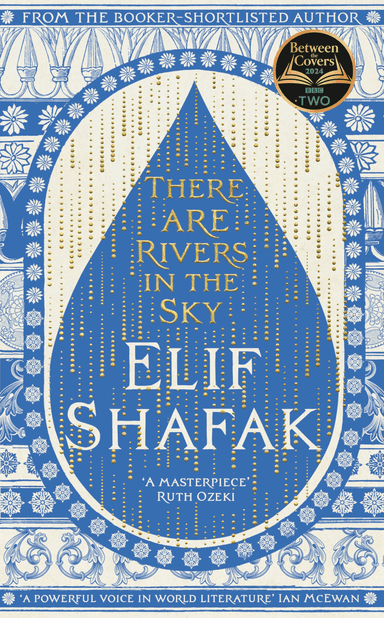
There Are Rivers in the Sky is a wonderful story. It follows three characters along two rivers: the Tigris in ancient Mesopotamia and modern-day Turkey, and the Thames in Victorian and modern-day London. It uses the Epic of Gilgamesh, one of the oldest surviving written stories in the world, as its central pillar. The story is then told through Arthur, a Victorian with a prodigious memory in a time of incredible societal change (based on the real-life George Smith), Narin, a 10-year-old Yazidi girl whose ancestral lands along the Tigris are held (and terrorised) by ISIS, and Zaleekhah, a newly divorced hydrologist (studying water) in 2018 London.
The book juxtaposes the timelessness of nature with the harsh reality of humanity. It's a story about interconnection, finding beauty in unexpected places and how society changes the world around us. I found the treatment of the Yazidi people (told through Narin) particularly challenging and emotional. But all good fiction teaches you about people and perspectives different from your own. Shafak also has a unique method of telling stories. This one is told through a drop of water, but I also read and loved The Island of Missing Trees this year, a story of Cypriot belonging and identity narrated by a fig tree. I'd highly recommend both.
"In deciding what will be remembered, a museum, any museum, is also deciding, in part, what will be forgotten."
"People fall into three camps: those who hardly, if ever, see beauty, even when it strikes them between the eyes; those who recognize it only when it is made apparent to them; and those rare souls who find beauty everywhere they turn, even in the most unexpected places."
"Better to be a gentle soul than one consumed by anger, resentment and vengeance. Anyone can wage war, but maintaining peace is a difficult thing."
A Fine Balance - Rohinton Mistry
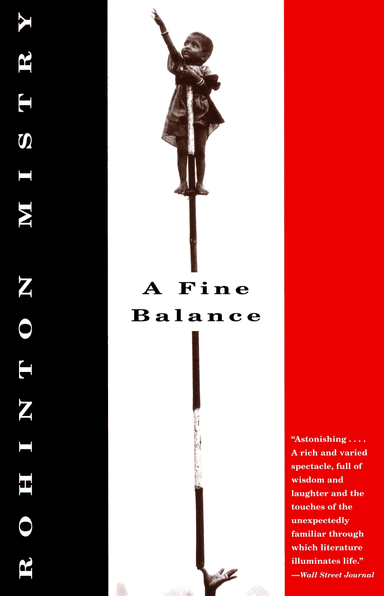
I found A Fine Balance whilst asking ChatGPT for books with a similar writing style to Khaled Hosseini and to one of 2024's top 10, The Covenant of Water by Abraham Verghese. It's an incredible, sweeping narrative, set in the political turmoil of 1970s India, specifically the 1975-77 'Emergency'. Through a range of circumstances, four strangers end up living in a cramped apartment in a "city by the sea" (Mumbai).
The story starts in the 1970s but keeps slipping back in time to slowly build up the backstory of each character. The way that Mistry does this is captivating, and by the end of the book I felt like I knew each of the characters intimately. It's a story rooted in post-independence India and its social reality: the caste system, abject poverty and structural injustice. It's one of those books that manages to perfectly encapsulate what it means to be human.
"It seemed so unfair: that time should render both sadness and happiness into a source of pain."
"Loss is essential. Loss is part and parcel of that necessary calamity called life."
'“God is dead,” said Maneck. “That’s what a German philosopher wrote.” She was shocked. “Trust the Germans to say such things,” she frowned. “And do you believe it?” “I used to. But now I prefer to think that God is a giant quiltmaker. With an infinite variety of designs. And the quilt is grown so big and confusing, the pattern is impossible to see, the squares and diamonds and triangles don’t fit well together anymore, it’s all become meaningless. So He has abandoned it."'
My Friends - Fredrik Backman
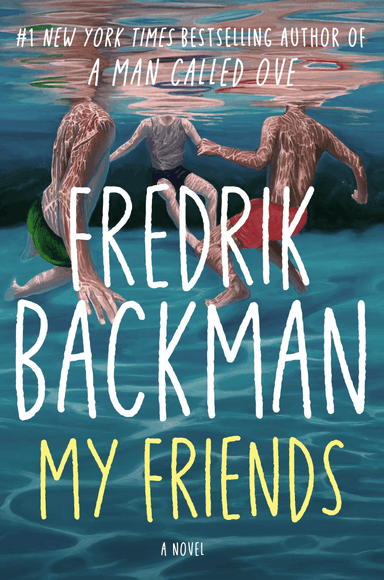
He's done it again. Backman is a stalwart in my reading blog posts and My Friends was another easy inclusion. No other author has the consistent ability to make me so invested in their characters and story that I'm weeping by the end of their books.
My Friends is about the friendship of four teenagers with pretty grim home lives in a small forgotten town. The main narrative takes place in the present day, through a similarly lost 18-year-old, who uncovers the lives and stories of the teenagers through a painting that comes into her possession. It's brutal, beautiful and a testament to the power of art and friendship at a time in our lives when everything is raw and intense. The way the story unfolds is distinctly Backman, and by the end I felt both full and empty.
"Our teenage years have to simultaneously be the brightest light and the darkest depths, because that’s how we learn to figure out our horizons."
"The basic function of a parent is just to exist. You have to be there, like ballast in a boat, because otherwise your child capsizes."
"Stories are complicated, memories are merciless, our brains only store a few moments from the best days of our lives, but we remember every second of the worst."
"Do you think God exists?” Ali asked her friends. “Yes,” Kimkim replied, running his pencil across the drawing so gently that it was impossible to know if it made a difference on the paper or just inside him. Joar was breathing hard. “Damned if I know . . . I don’t even think all the people who go to church every Sunday believe in God. I think they just need company. To feel that they belong to a group.” Kimkim nodded gently and replied: “But I don’t think that means that God doesn’t exist, Joar. I think maybe that’s what God is."
Against the Loveless World - Susan Abulhawa
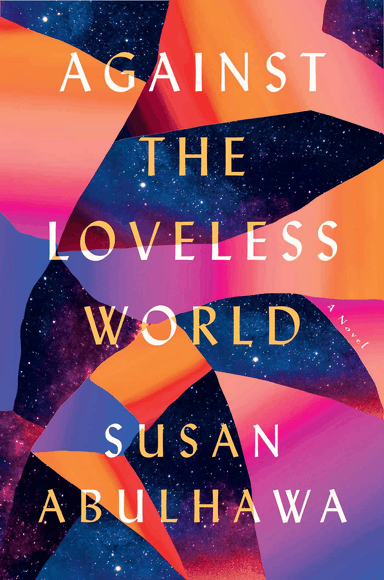
There was definitely a theme in my top fiction books this year. Against the Loveless World is another beautiful but devastating read. It's a story of a lost country, disenchantment, radicalisation and the search for a better life.
The book follows Nahr, a Palestinian refugee born in Kuwait in the 1970s. It charts her brutal journey through poverty, prostitution, exile and resistance. The story is interwoven with the history of the region told from Abulhawa's Palestinian perspective, who was born to Palestinian refugees herself. The book is an essential read for anyone interested in the history of the Isreal-Palestine conflict and its impact on the Palestinian people.
"Music is like spoken language, inextricable from its culture. If you don’t learn a language early in life, its words will forever come out wrinkled and accented by another world"
"Palestinians who had been chased out of their homes in Jerusalem, Haifa, Yafa, Akka, Jenin, Bethlehem, Gaza, Nablus, Nazareth, Majdal, and every major Palestinian city found a place in Kuwait. The oil boom offered opportunity to build a new life there. Although Kuwait never allowed us more than temporary residency—making it clear we were always guests—Palestinians prospered and had a major hand in building Kuwait as the world knows it now. We participated and contributed in nearly every sector of life, but we remained an underclass."
"Israeli settlers setting fire to trees during the harvest had become so commonplace in the past ten years that international aid organizations had been established for the sole purpose of defending Palestinian farmers."
"Their deceit, once planted in the public imagination—like the epic fabrication of a Jewish nation returning to its homeland—had grown into a living, breathing narrative that shaped lives as if it were truth."
And some honourable mentions:
- Musashi - Eiji Yoshikawa - A translated (and very long) tale of the famous swordsman, philosopher and strategist Miyamoto Musashi.
- The Art of Racing in the Rain - Garth Stein - An emotional story about motor racing told from the perspective of a dog.
- The Will of the Many - James Islington - A fantasy set in a Roman-like society based on the power of "will". The second one in the series was also very good.
- And The Mountains Echoed - Khaled Hosseini - A breathtaking story of love and loss in Afghanistan.
An Important Announcement (and a Reflection)
Thanks for reading. As always, please let me know if you have read or do read any of these books. I'd love to hear what you thought of them.
Normally, I'd tell you that I'm aiming to read 52 books again, but the "important" announcement is that I'm not setting myself a reading goal in 2026.
I was 22 when I first challenged myself to read 52 books in a year. Like most 22-year-olds, I was a little lost, and I had no idea what the next 10 years of my life would bring. Reading so much and so widely has had an immeasurably positive impact on my life. I have a far greater understanding of myself and the world, which has been vital in my career successes. I also like to think that I've grown into a well-rounded and empathetic person. Reading 648 books(!) in 10 years is a monumental achievement, but it feels like it has also become an inescapable part of my identity. A few times in 2025, I found myself questioning whether I still actually enjoy reading, particularly when I was forcing myself to slog through a heavy non-fiction book after a mentally exhausting workday. I've realised that reading has become a chore, and that in recent years I've normalised guilt as a motivating factor to keep myself reading. None of this is healthy behaviour, and as I enter a new chapter of my life, it's time to let go of holding myself to a target that requires so much time and effort. In 2026, I'm only going to read when I feel like it, rather than to 'improve' myself or for Goodreads numbers. As for my identity as a 'reader', that's something that I'll still have, but without the pressure of being someone who 'reads a lot'.
So... maybe I'll see you back here next year for a top five, or even a top three? Or a blog post on gaming, gardening or DIY? Or maybe no blog post at all... I don't know, but I'm excited for what 2026 has in store.
Links to the previous yearly round-ups:
- 2020 - A Year in Books
- 2021 - A Year in Books
- 2022 - A Year in Books
- 2023 - A Year in Books
- 2024 - A Year in Books
Stats
My 10 years on Goodreads:
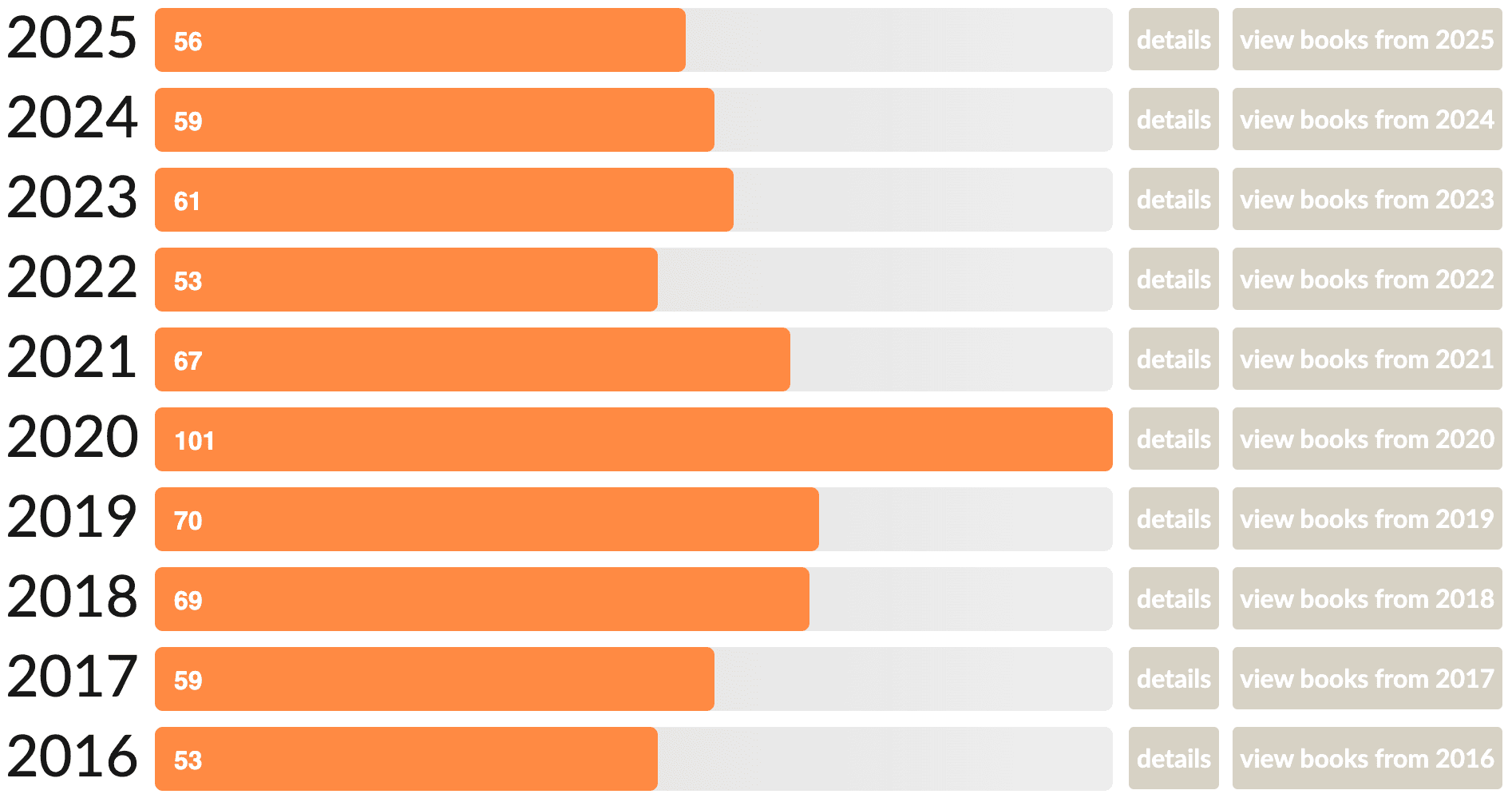
Book counts year-on-year
Page counts year-on-year
Book counts month-on-month
Page counts month-on-month